
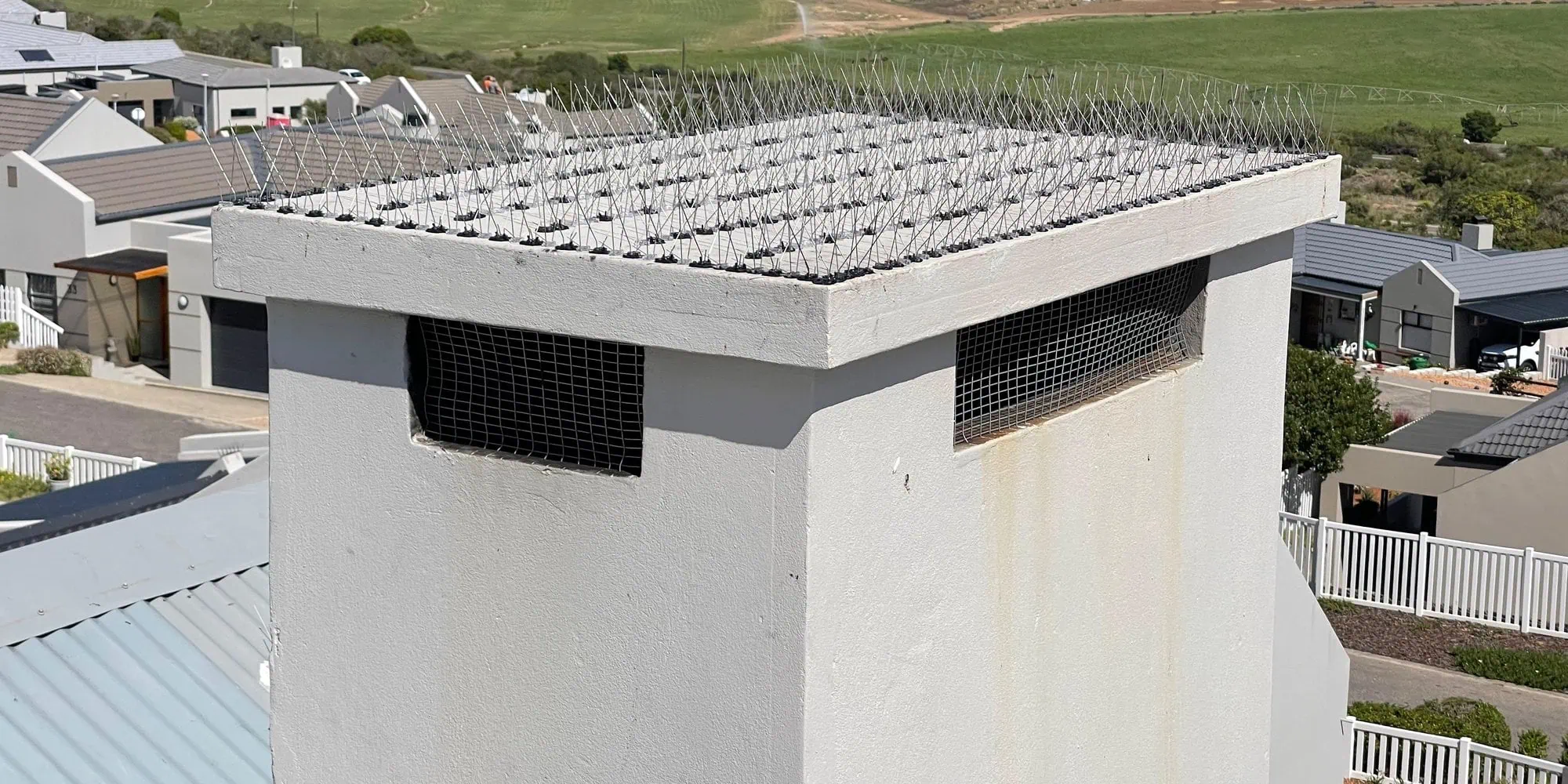
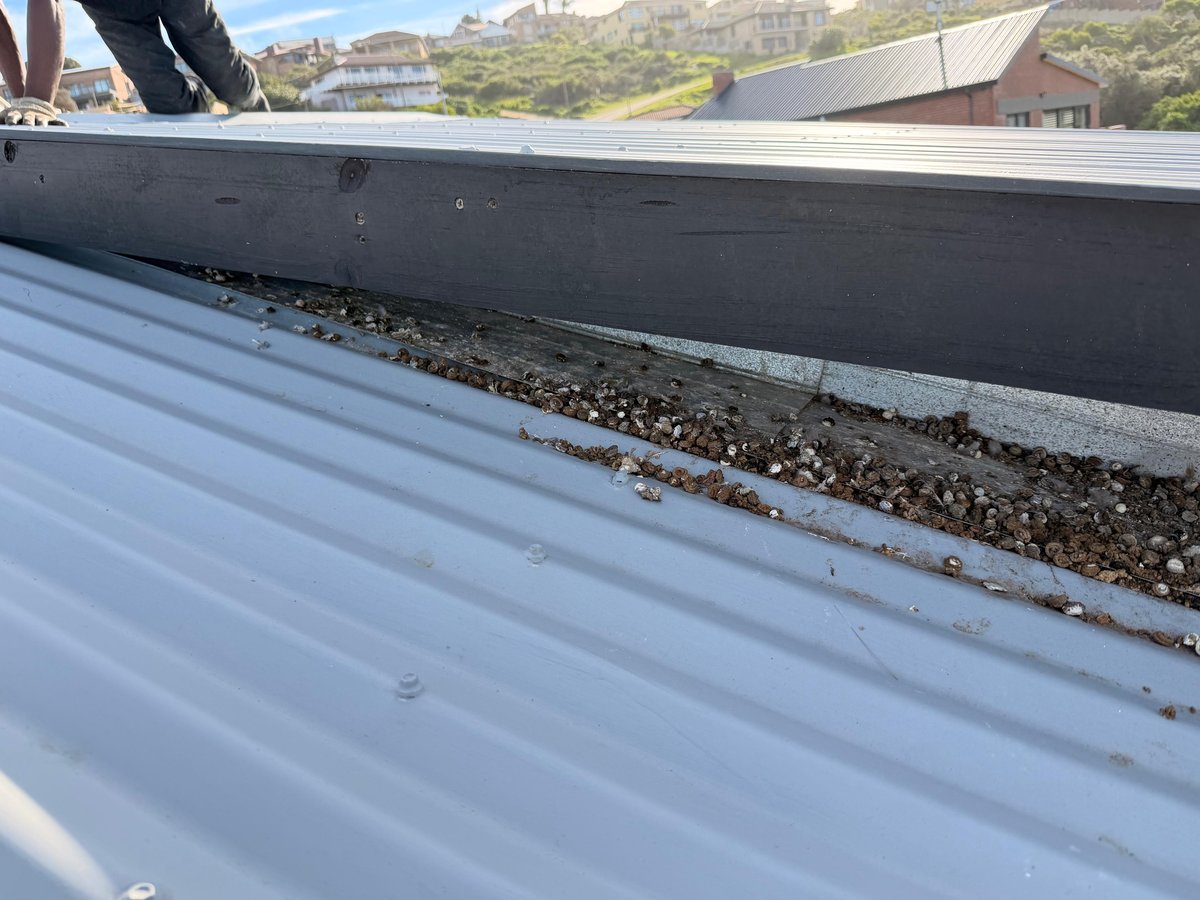
A bird problem is never just a few birds on a roof. By the time most people phone us there is guano down the walls, nesting material blocking the gutters, a smell in the top floor rooms and, more often than people expect, something nesting inside the ceiling.
Exclusive Eco does humane bird control across George, Wilderness, Sedgefield, Knysna, Plettenberg Bay, Mossel Bay and the wider Garden Route, for private homes, estates and body corporates, and commercial buildings. We close the roosting space, clean up what the birds left, and guarantee the work.
Identify the culprits
Six birds cause almost all the roof and building problems we are called out to across the Garden Route. Which one you have changes what needs doing, because they do not all use a building the same way.
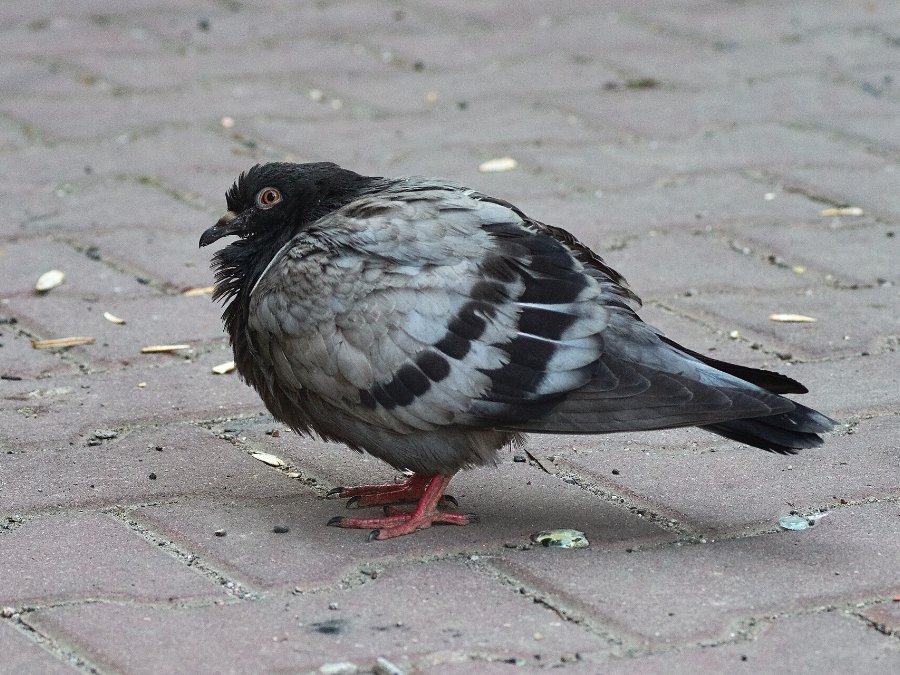
Feral Pigeon. The common town pigeon. Grey, with a green and purple sheen on the neck, and in every colour mix from near white to almost black.
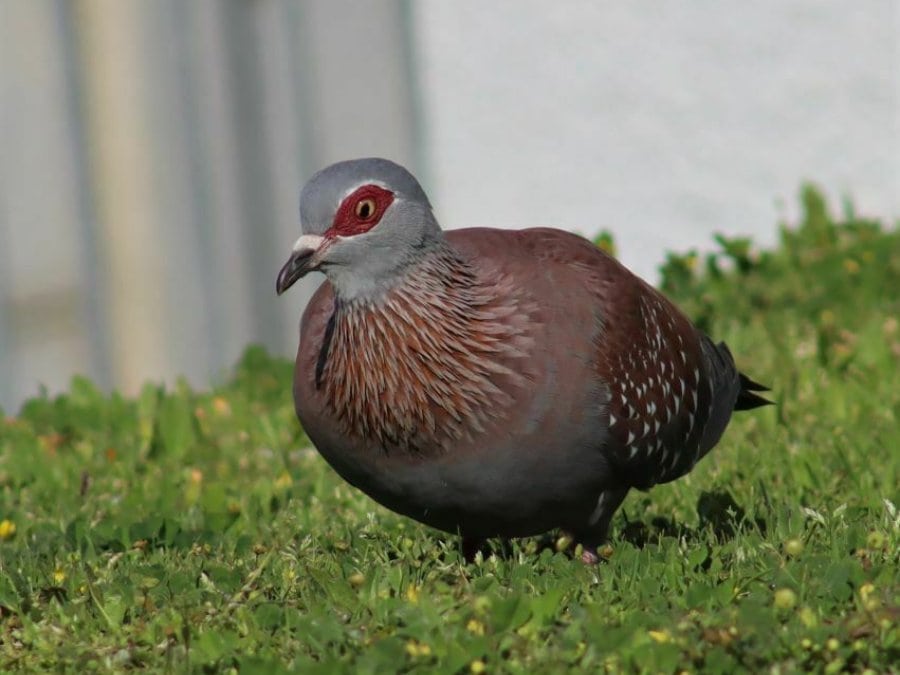
Speckled Pigeon. Bigger. Rust coloured wings flecked with white spots and a bare red patch around the eye. Native, and completely at home on buildings.
Both pigeons want the same thing, which is a sheltered space to roost and nest. On a modern house that usually means under the solar panels, or tucked in under the soffits and the sheltered parts of the roof.
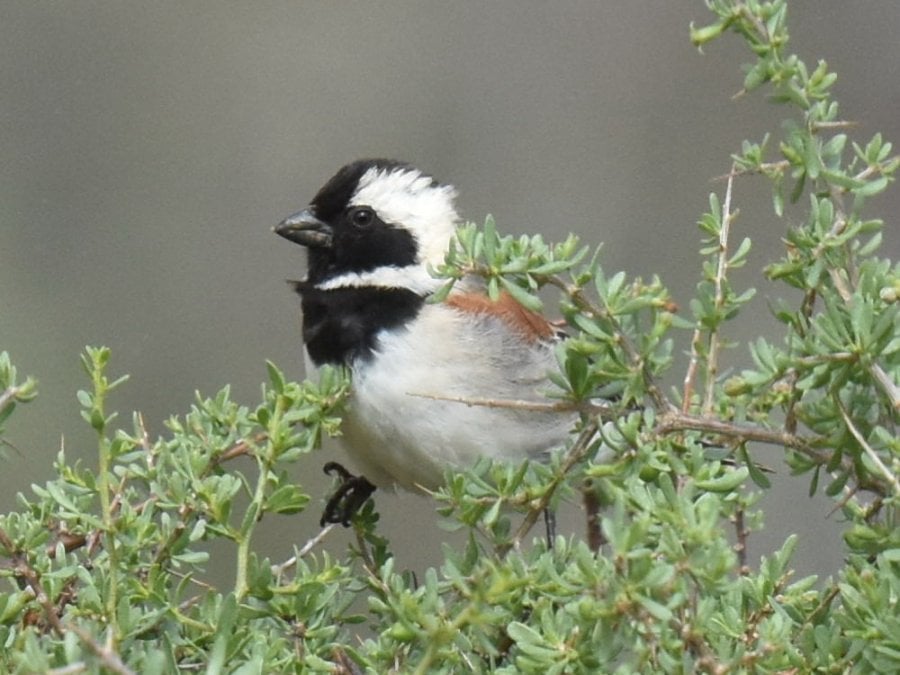
Cape Sparrow. Small, and the one most people write off as harmless. They roost and nest on the beams around the house, and they will get into the ceiling given the chance.
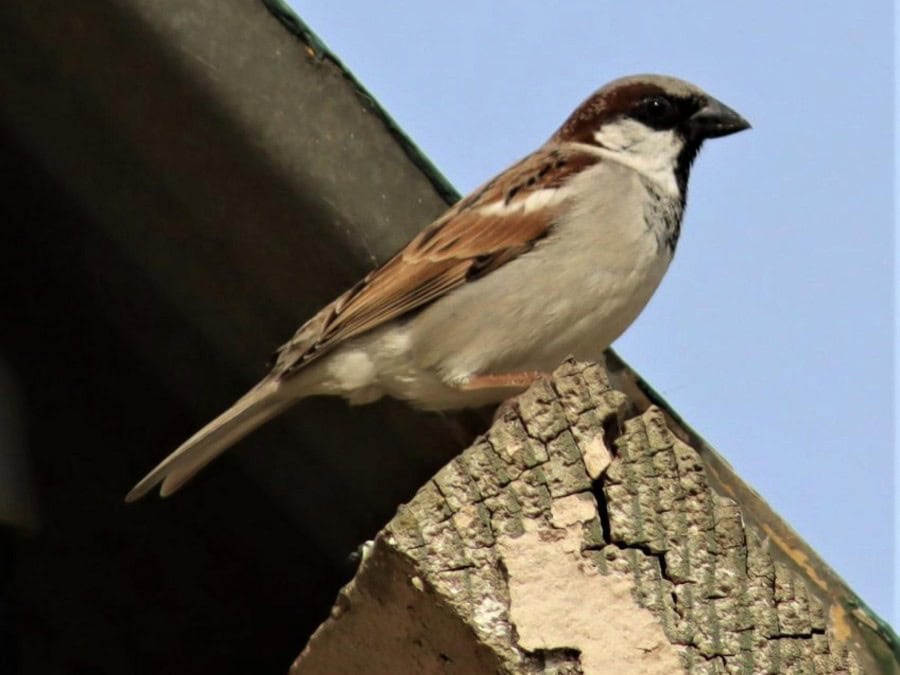
House Sparrow. The plainer of the two. The male has a grey crown and a black bib, the female is streaked brown with no markings to speak of. It nests in eaves, roof voids and any gap under a tile or behind a gutter, and it is the one most people have without ever noticing.
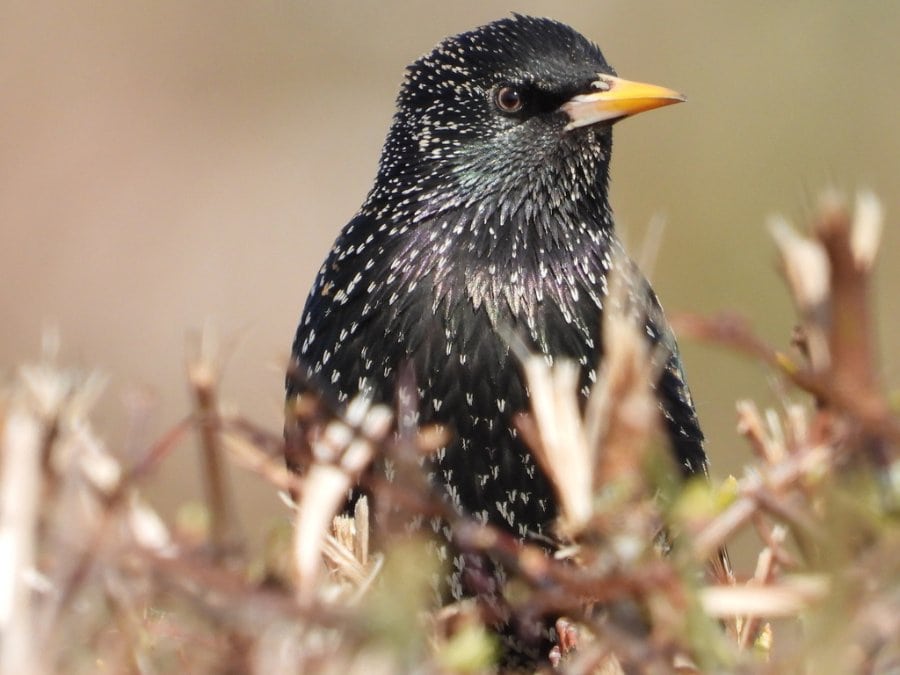
European Starling. Glossy black with a purple and green sheen and pale speckling. This is the worst of the six by a distance. It is not a South African bird at all, and it competes with our own species for the same nesting spaces. Starlings nest inside your ceiling rather than on the outside of the building, and most starling nests we remove are carrying lice. That is what turns a bird problem on the roof into a problem in the rooms underneath it.
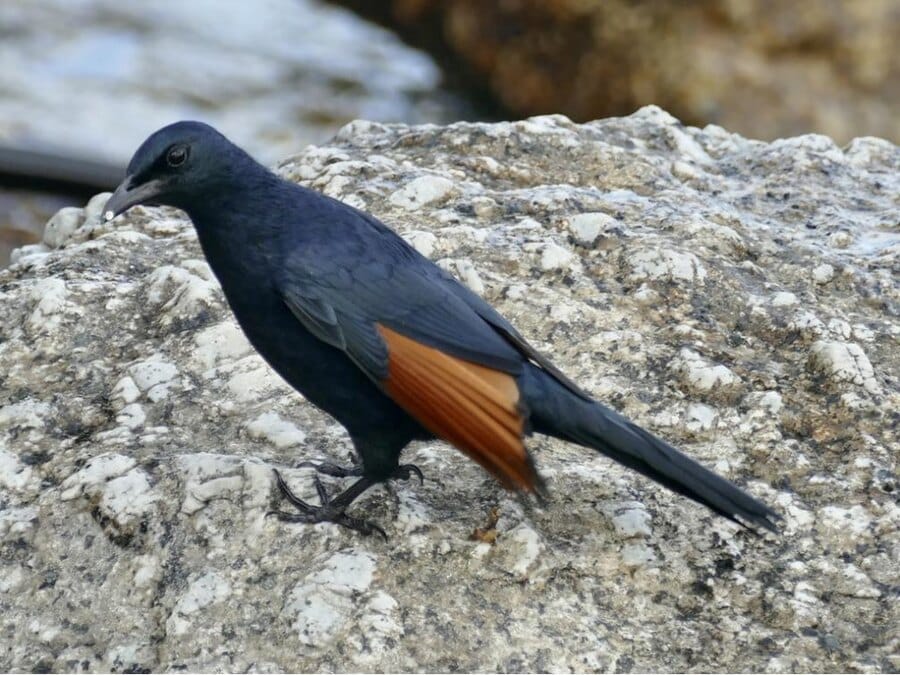
Red-winged Starling. Glossy blue black with rust coloured flight feathers that only show properly when it opens its wings. The male has a black head, the female a grey one. This one is genuinely ours, and that is exactly the problem: it is a cliff nester by nature, so a building with ledges, parapets and open beams reads to it as a cliff face. It builds a heavy cup of sticks and mud on a ledge and comes back to the same one year after year.
How do you get rid of pigeons?
You take away the place they are nesting and roosting. Everything else is secondary.
That is the part most people get wrong. Deterrents, gels, spinning things and noise all attack the symptom. If the ledge, the roof void, the gap behind the parapet or the space under the solar panels is still open, the birds stay, because the shelter is what brought them there in the first place.
It is also not always a flock. Pigeons included, a single pair will settle on one spot and keep returning to it, and one pair in a ceiling is more than enough to be a problem worth solving.
So the honest answer is unglamorous. Find every place the birds are getting in, roosting and nesting, close all of them, clean up behind them, and only then look at whether the exposed surfaces need anything on top.
What the birds are costing you
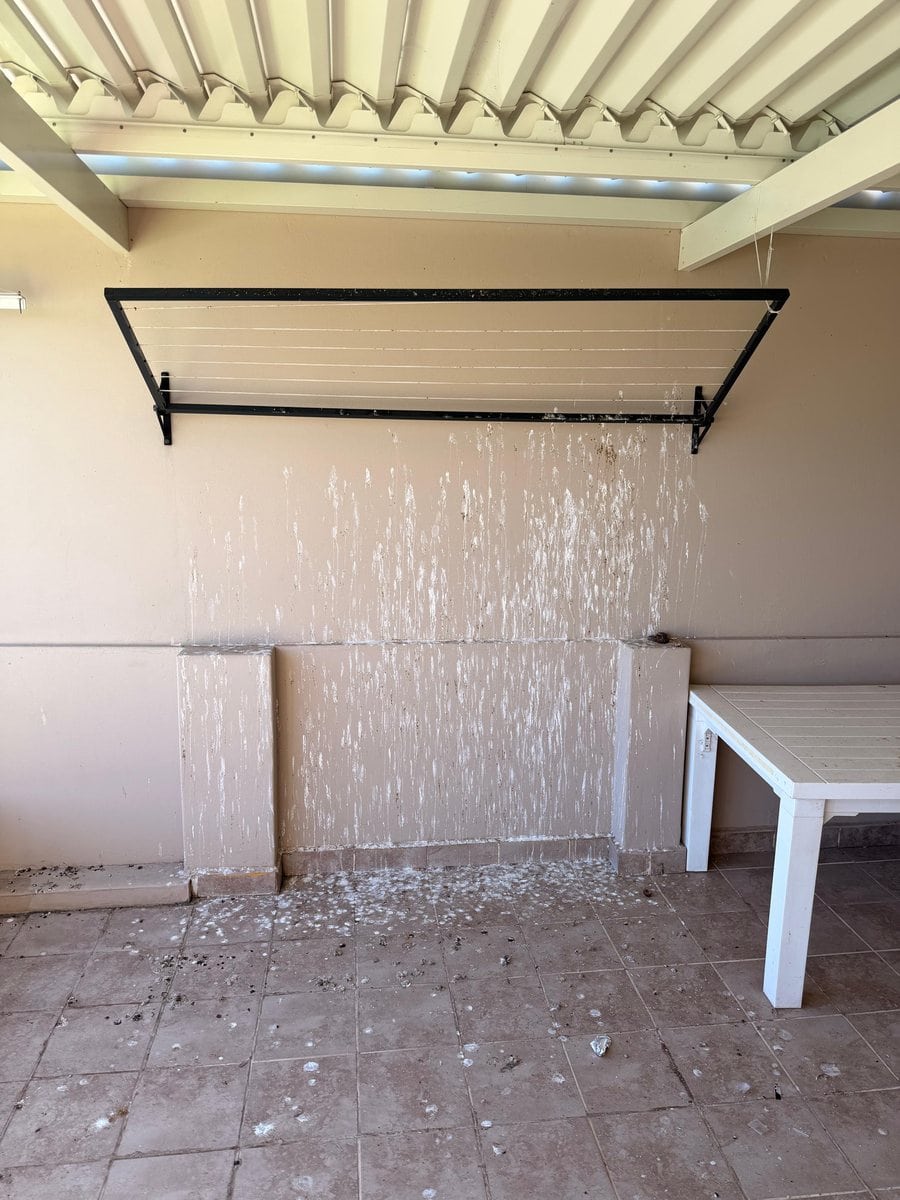
- Damage to the building itself. Guano is acidic. It eats into roof sheeting, paint and mortar, it marks walls in a way that does not wash off, and it packs gutters and downpipes solid with a mix of droppings and old nesting material.
- A health matter, not only a mess. Dried guano and the dust that comes off it are a real concern anywhere people live or work underneath the roost, and more so on food premises.
- Lice and mites travel. They leave the roost or the nest, get into the roof space, and end up in the rooms below. That is usually the point at which a bird problem people have tolerated for years suddenly becomes urgent.
- Fire and water risk. Dry nesting material packs against roof penetrations, cabling, gutters and under solar panels. None of those are places you want it sitting.
- What visitors see. On a shopfront, a hotel, a restaurant, a school or an estate entrance, bird mess tells everyone who walks past something about how the place is run.
- Stopped production. In a factory a bird problem can halt your line, and that turns it from an irritation into a bill running into tens of thousands of rands.
What we fit
Which of these your building needs depends on what the birds are doing and where.
Mesh proofing. Closing off the openings birds are using to get into a roof void or under a structure. This is the workhorse of most jobs, and the material is chosen for the position it has to survive in.
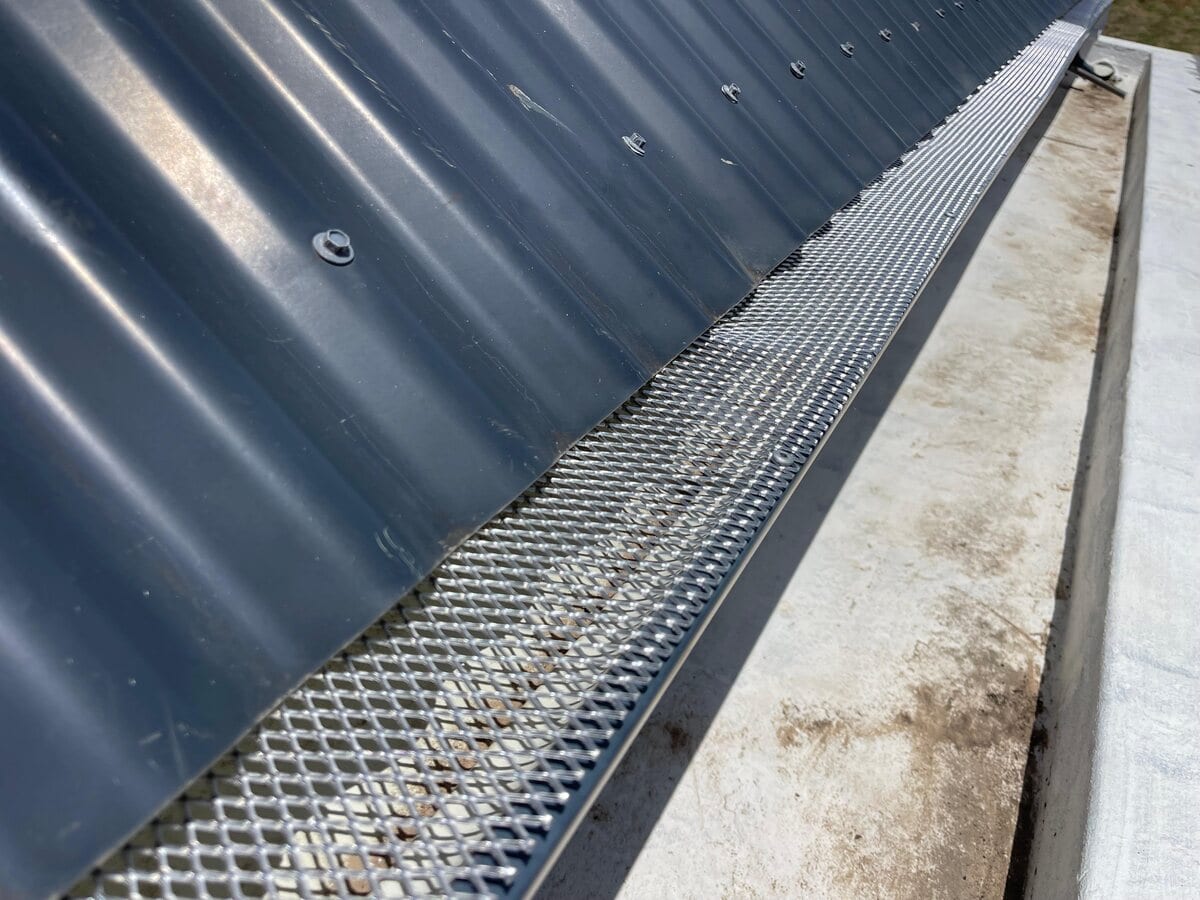
Gutter guards. Aluminium mesh fitted over the gutters, closing them off so birds cannot get in to roost or nest. Gutters are one of the most common places a bird problem starts, and one of the most commonly missed when a building is proofed.
Bird netting. Where an opening is too large to mesh, or where a whole void behind a structure has to be enclosed, netting closes the volume rather than the edge. We also fit net ceilings in warehouses and factories, closing off the entire roof space above the floor. Our netting carries an eight year guarantee.
Bird spikes. Marine grade stainless steel, on the ledges, parapets and roof valleys where birds land and roost. Anything less than marine grade does not survive this close to the sea, which is why cheap spikes on the coast fail within a season or two.

Bird wire. A fine stainless wire held under tension just above a ledge, a beam or a rail, so there is nowhere comfortable to settle. It is close to invisible from the ground, which matters on a building where appearance counts.
Reflective deterrents. Optical and moving devices that make an open area unattractive to land on. We fit these to a placement plan rather than by eye, because where they go decides whether they do anything at all.
Why bird proofing fails
Bird proofing looks simple from the ground. That is why it so often goes to a handyman, or to a general pest company that does it as a sideline, or gets done on a Saturday with whatever the hardware shop had on the shelf.
Then we get called out to fix it. These are the four failures we see most often, and every one of them comes back to the same two things: not knowing the bird, and not knowing which product survives where.
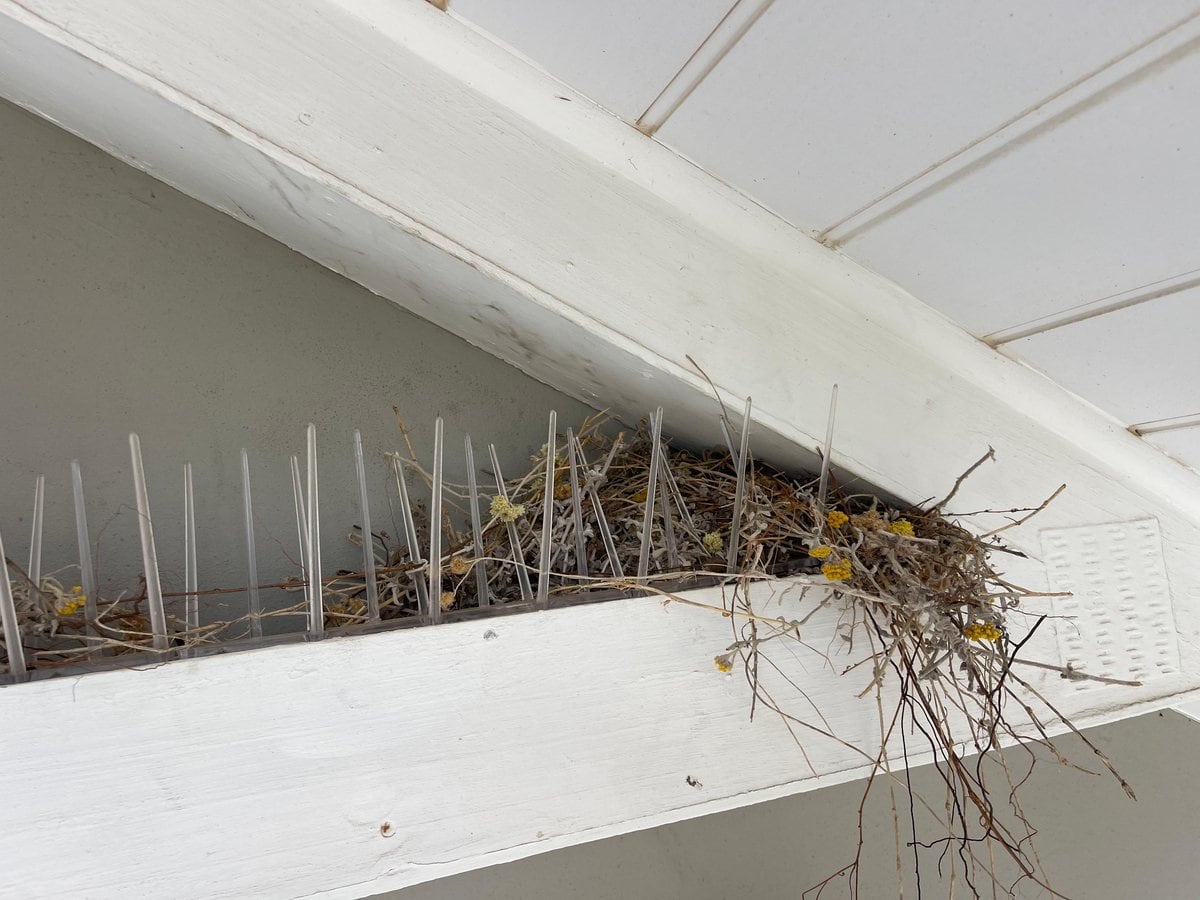
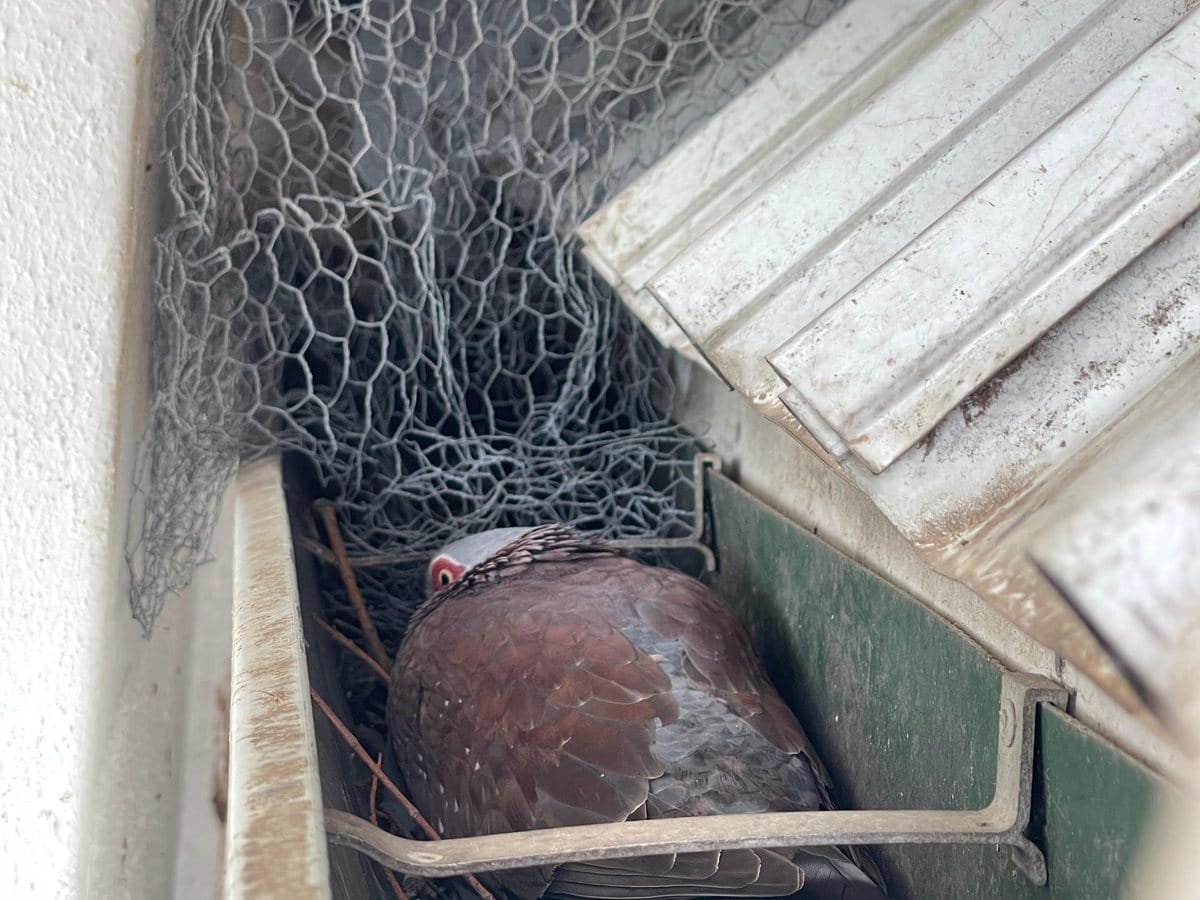
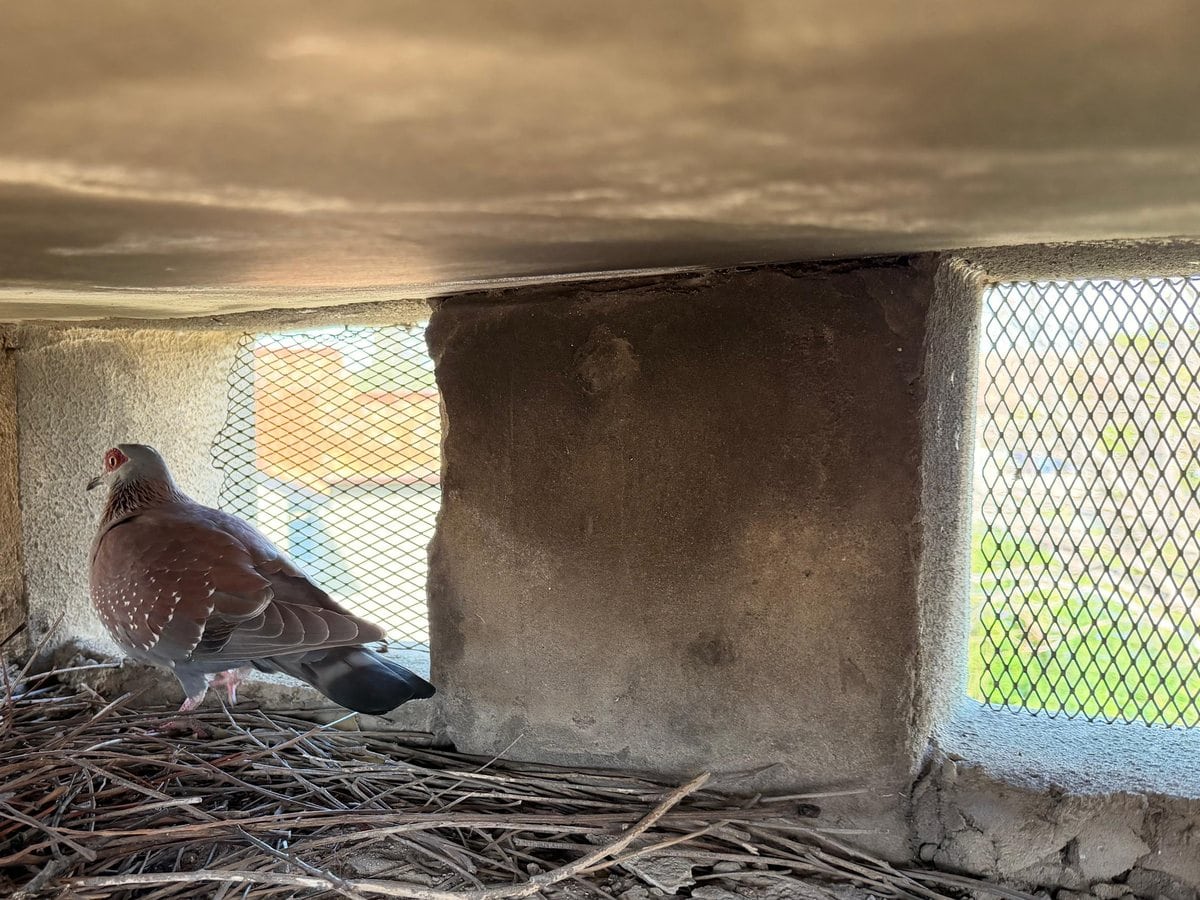
The wrong spikes. Spikes are not one product. A row that works against one species will not touch another, because the birds do not use a ledge the same way. These came off a hardware shop or farm co op shelf and went up without anyone asking which bird was using the ledge or how it behaves there. Choosing correctly starts with the species, not with what was in stock.
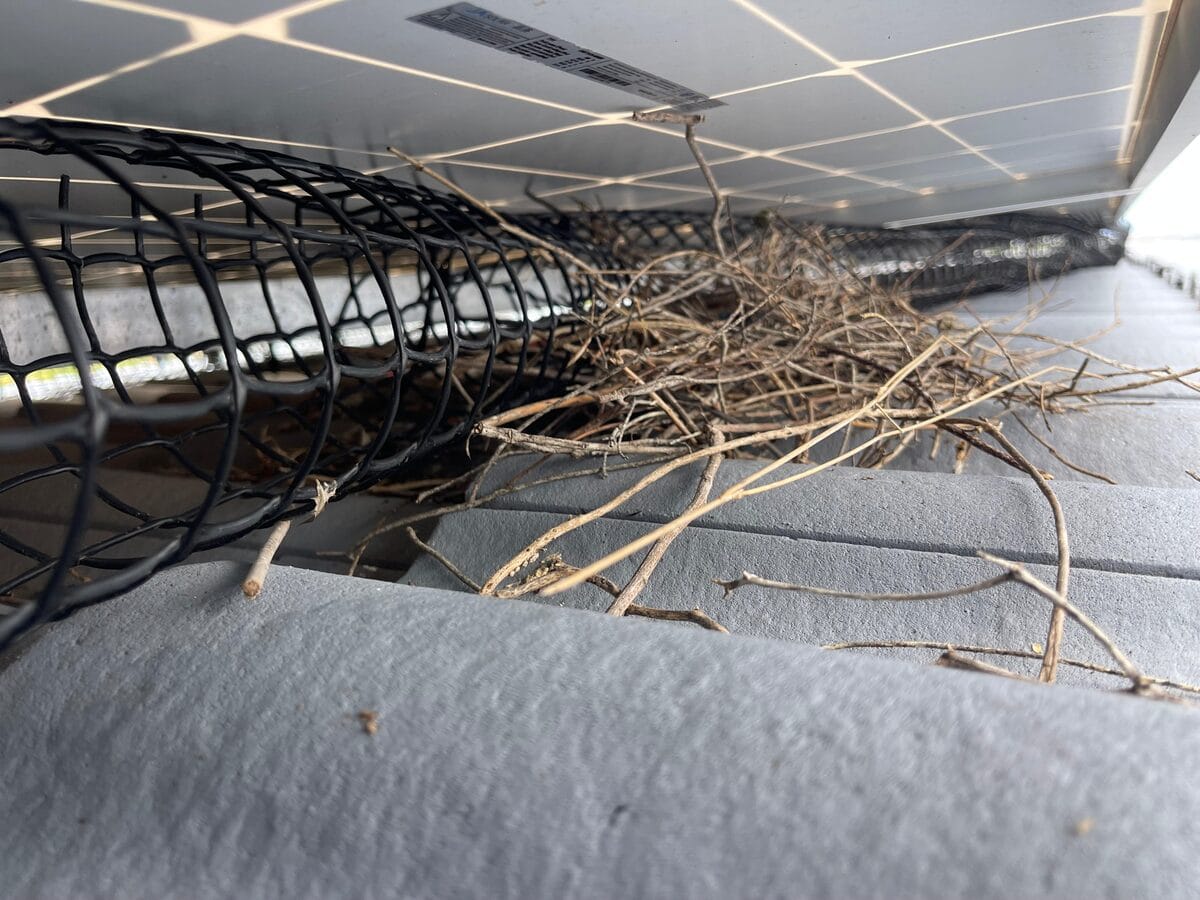
Mesh put up in a roll. Under the panels on this roof, mesh was run along the edge still folded in a roll rather than closed off properly. It leaves exactly the sheltered gap the birds were after, and the pigeon has built its nest hard up against it. The material was not the problem. Nobody actually closed the opening.
The wrong product for the bird. The owner here had already called a company in to close the space, and it was closed with wire mesh. It did not hold, because the choice was made without knowing which bird was using the space or which product suits it. The pigeon is nesting behind the mesh that was meant to keep it out.
Chimney barriers that do not hold. A chimney is a favourite roost, and a barrier that is not fitted properly to the opening will not stop a pigeon. It simply pushes past and nests inside, which is exactly what happened here. Fitted badly, a barrier can also pack solid with soot and obstruct the flue, so it becomes a second problem rather than a solution.

None of this is fixed by being handier with a pair of snips. It comes down to knowing which species you are dealing with, how that bird behaves on a building, and which product lasts in this climate. That is the difference between a job that holds and a job somebody else gets called back to redo.
Do reflective bird deterrents actually work?
Yes, within limits, and it is worth being straight about where those limits sit.
A reflective deterrent makes an open surface unpleasant to settle on. That is all it does. It will not close a roof, it will not shift birds that are already nesting, and it will not solve a site where food is freely available, whether that is a bin area, a feeding neighbour or a restaurant service yard.
If someone tells you a reflective deterrent alone will fix an established pigeon colony, they have not been on your roof. Physical proofing is what ends the problem. Reflective deterrents keep the exposed surfaces undesirable once the proofing has done the real work.
Cleaning up what the birds left
We remove the nesting material and the guano, and we treat the area before anything is closed up, so what gets sealed in behind the proofing is not left contaminated.
The reason this matters is what lives in the mess. Bird lice and mites do not stay on the bird. Once a nest is established above a ceiling they spread through the roof space, and from there into the bedrooms and offices underneath. Where they have already reached the rooms below, treating those rooms can be quoted as an additional service.
If the parasites have already reached the rooms below, our bird lice page explains what they are, why they appear once the young have left the nest, and what treating them involves.
Dried guano is the other half of it. It is a real health concern for anyone living or working under a roost, and the dust that comes off it is worse than the mess you can see. Proofing over the top of it without cleaning first simply seals the problem inside the building.
Who we do this for
Homes. Roofs, gutters, eaves, patios, chimneys and solar panels. This is where we deal most with European Starlings, because a house ceiling is exactly what they are looking for.
Estates and body corporates. Treat part of a complex and you may see no improvement at all, because the flock simply relocates to the untreated blocks on the same property. Owners in the finished blocks then reasonably conclude the work failed. We would rather phase a whole site properly over months than proof three blocks and leave you explaining a result nobody can see. Pricing improves at complex and estate scale, and our measured survey is free.
Commercial and industrial. Warehouses, factories, food premises, schools, shopping centres and office parks. Loading bays, canopies, roof voids and steelwork are the usual problem areas. We work around your operating hours where we can, and we can help a bird control programme at an FMCG site stand up to an audit cycle.
When proofing is not enough: trapping
Some sites cannot stop feeding birds. A livestock feed lot, a mill, a factory handling grain or open product: the food is the business, and it cannot be taken away or closed up the way a roosting space can.
On a site like that, proofing on its own will not hold. The birds are not coming for the shelter, they are coming for the food, and they will keep coming back to it for as long as it is there. This is where trapping is the honest answer rather than a last resort. Birds are caught alive and removed off site, and on a site like this it runs as an ongoing programme rather than a single visit.
Trapping is a restricted activity. The necessary permits are obtained from CapeNature before any of that work is carried out.
We will tell you if your site does not need it, and most do not.
Solar panels are a separate job
The space under a solar array is the single most attractive roosting spot on a modern roof, and proofing it is different enough from general roof work that it has its own page.
Bats in the roof are a separate job as well. Different animal, different rules, and it has its own page: bat exclusion across the Garden Route and Western Cape.
The order we work in
We inspect. Every job starts on the building, not from a photograph of the front of it. We find where the birds are actually getting in, which is rarely only what you can see from the ground, and we identify the species while we are up there, because that decides everything that follows.
We choose the method and the products. Species, structure and exposure decide what goes on. The same problem on two buildings does not always get the same answer, and the wrong product on the right problem fails just as completely as fitting nothing at all.
We quote. You get the scope and the price in writing before anything starts, with the cleaning and the proofing set out separately so you can see what you are paying for, and no obligation to proceed.
We execute. Cleaning first, then proofing, then deterrents last and only where they are needed. Closing most of the ways in and leaving one is the single most common reason a bird job fails within a season, and it is the failure we are called out to fix most often.
Working safely on your building
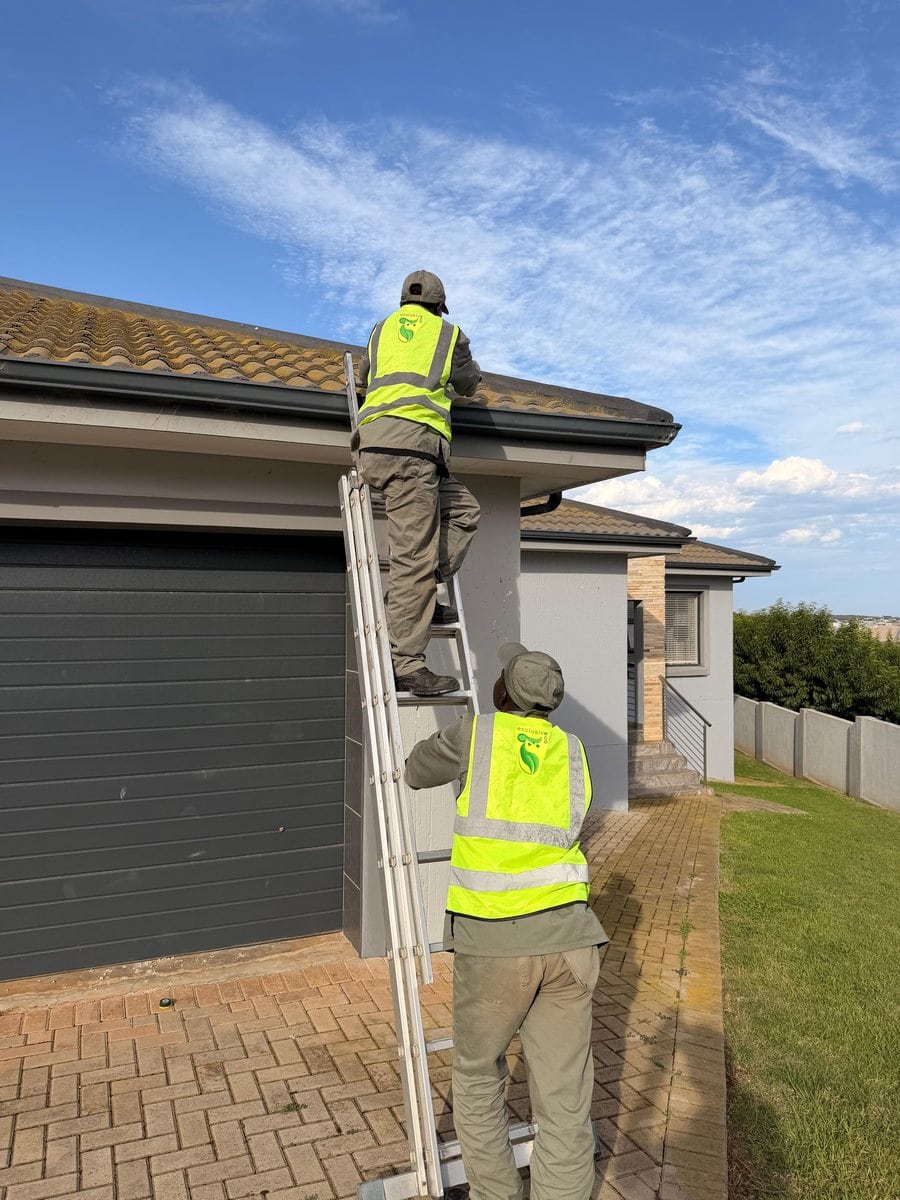
Our technicians are experienced at working at height and use fall prevention equipment on every job. We carry public liability and professional indemnity cover, which is worth asking any contractor for before you let them onto your roof.
Why humane control lasts
Everything above works the same way: take away the nesting space, make the surfaces unattractive, and the birds move on by themselves.
That is not only a position we hold, it is what lasts, and it shows up most clearly with pigeons. Clear a flock off a building and nothing changes for long, because the space that drew them is still open and a new flock finds it inside a season. The same holds for the rest. A starling pair moved out of a ceiling that is still open will be back in it, or another pair will take the space. Closing the space is what ends it.
What does bird proofing cost?
We quote per building, because the roof profile, the access, how much cleaning is needed and how much of the structure has to be closed all change the number. Estates and complexes are priced at better rates than single buildings.
We can give you a provisional figure from clear photographs, and from satellite imagery where reflective deterrents are involved, before anyone climbs anything. Send us photographs of the problem on WhatsApp and we will come back to you honestly, including telling you if you do not need us.
Our guarantee
We guarantee all installations and workmanship. The period depends on the products fitted and is set out in your quote. It is worth being precise about what that guarantee covers, because the distinction is the honest part.
What we will promise. Where we have proofed, the birds stay out. Bird free solar panels. Bird free ceilings. Any area we have closed off stays closed off.
What we will not promise. A bird free property. If a bird settles on a stretch of roof we have not treated, that is not the work failing, it is simply somewhere the work does not reach. Anyone who promises you a whole property free of birds is selling you something.
So what we guarantee is our work: the proofing, the fixings and the installation.
Where we work
Bird control and pigeon proofing across George, Wilderness, Sedgefield, Knysna, Plettenberg Bay, Mossel Bay, Hartenbos, Great Brak River, Klein Brak River, Vleesbaai, Gouritzmond, Oudtshoorn and the wider Garden Route and Klein Karoo.
Get a free quote
Send photographs of the problem and your location on WhatsApp and we will give you a provisional figure, then a free measured survey with no obligation to proceed.
